



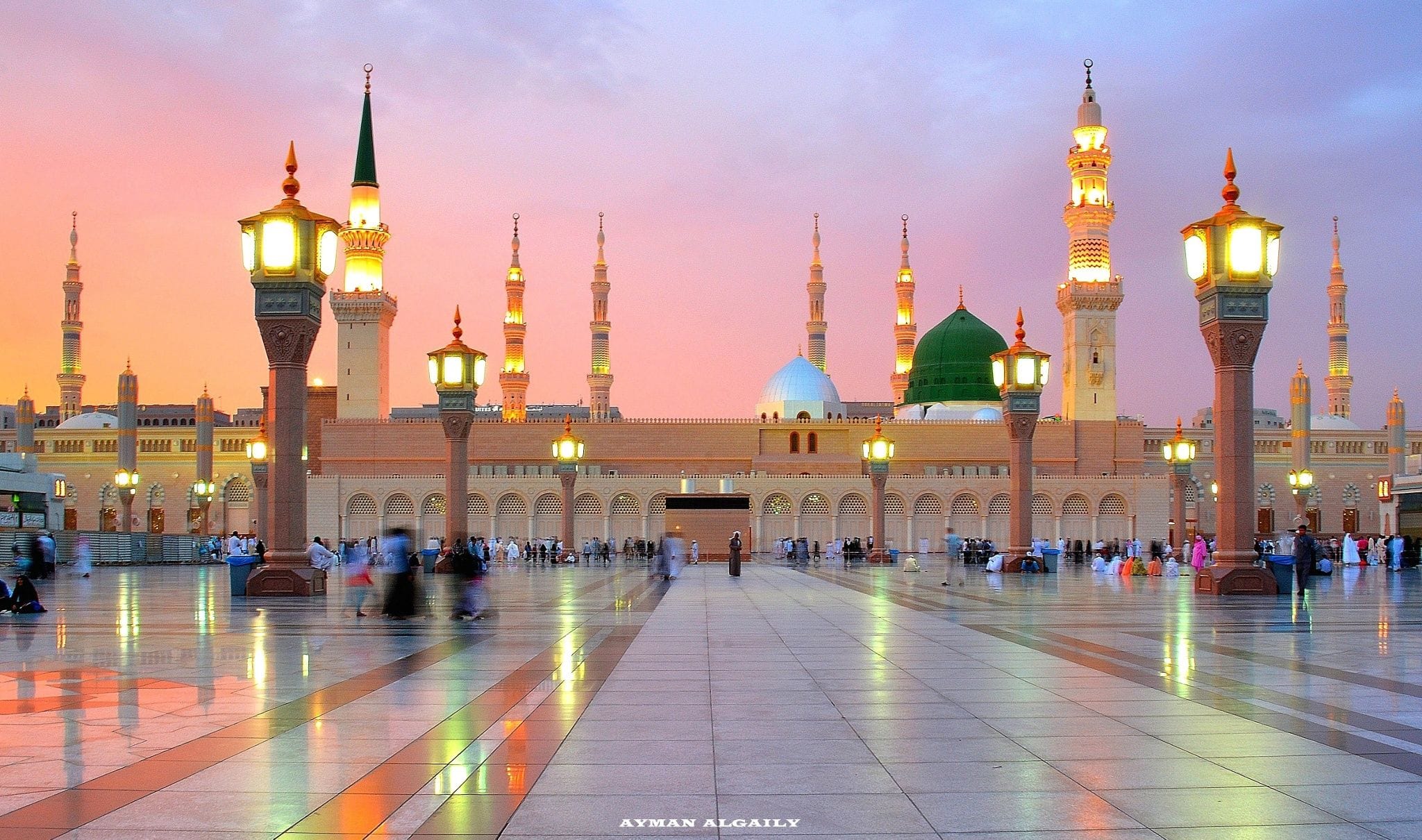







Madinah (Medina) is also known as Madinah An-Nabi (The City of the Prophet) or Madinah Al-Munawwarah (The Enlightened City), or Medina. In ancient times, the city was known as Yathrib. Located 450 kilometers (200+ miles) north of Makkah, Yathrib was an agricultural center in the harsh desert landscape of the Arabian Peninsula. Blessed with an abundant water supply, the city of Yathrib became a stopping point for caravans passing through, and its citizens were heavily involved in trade. When the Prophet Muhammad and his followers faced persecution in Makkah, they were offered refuge by the main tribes of Yathrib. In an event known as the Hijrah (Migration), the Prophet Muhammad and his Companions left Makkah and traveled to Yathrib in 622 A.D. So significant was this migration that the Islamic calendar begins counting time from the year of the Hijrah. Upon the Prophet's arrival, the city became known as Madinah An-Nabi or Madinah ("The City") for short. Here, the small and persecuted Muslim community was able to become established, administrate their own community, and implement elements of religious life that they were unable to do under Makkan persecution. Madinah thrived and became the center of the growing Islamic nation. Upon arrival in Madinah, one of the first things the Prophet Muhammad wished to do was build a mosque. The story is told that the Prophet Muhammad let his camel loose, and waited to see where it would wander and then stop to rest. The place where the camel stopped was selected as the location of the mosque, which is known as the "Prophet's Mosque" (Masjed An-Nawabi). The entire Muslim community (original residents of Madinah, as well as the migrants who had moved from Makkah) came together to help build the mosque out of mud bricks and tree trunks. The Prophet Muhammad's apartment was constructed on the eastern side, adjacent to the mosque. The new mosque soon became the center of the city's religious, political, and economic life. Throughout Islamic history, the mosque has been expanded and improved upon, until it is now 100 times larger than its original size and can accommodate more than half a million worshippers at a time. A large green dome now covers the Prophet Muhammad's residential quarters, where he is buried along with the first two Caliphs, Abu Bakr and Omar. Over two million Muslim pilgrims visit the Prophet's Mosque each year. Upon his death in 632 A.D. (10 H.), the Prophet Muhammad was buried in his house which adjoined the mosque at the time. Caliphs Abu Bakr and Omar are also buried there. Over centuries of mosque expansion, this area is now enclosed within the mosque walls. The tomb is visited by Muslims as a way of remembering and respecting the Prophet. However, Muslims are careful to remember that a grave is not a place for worship of individuals, and frown on extensive displays of mourning or reverence at the site.Prophet's Mosque
Prophet Muhammad's Tomb
Just follow us on social media, where stories unfold,
Stay with us for moments worth their weight in gold.


SCAN ME
